The search for more sustainable and locally sourced ingredients is becoming increasingly relevant across the pet food industry. At the same time, the food processing sector generates valuable co-products that may offer opportunities for higher-value applications.
Tomato pomace, a co-product of tomato processing, is one such resource. In Portugal alone, an estimated 51,000–85,000 tonnes of tomato pomace may be generated annually.
A recent scientific study evaluated the incorporation of enzymatically pre-treated and vacuum paddle-dehydrated tomato pomace (ETP) in extruded diets for adult dogs, providing new insights into its potential application as a pet food ingredient.
From Tomato Co-Product to Pet Food Ingredient
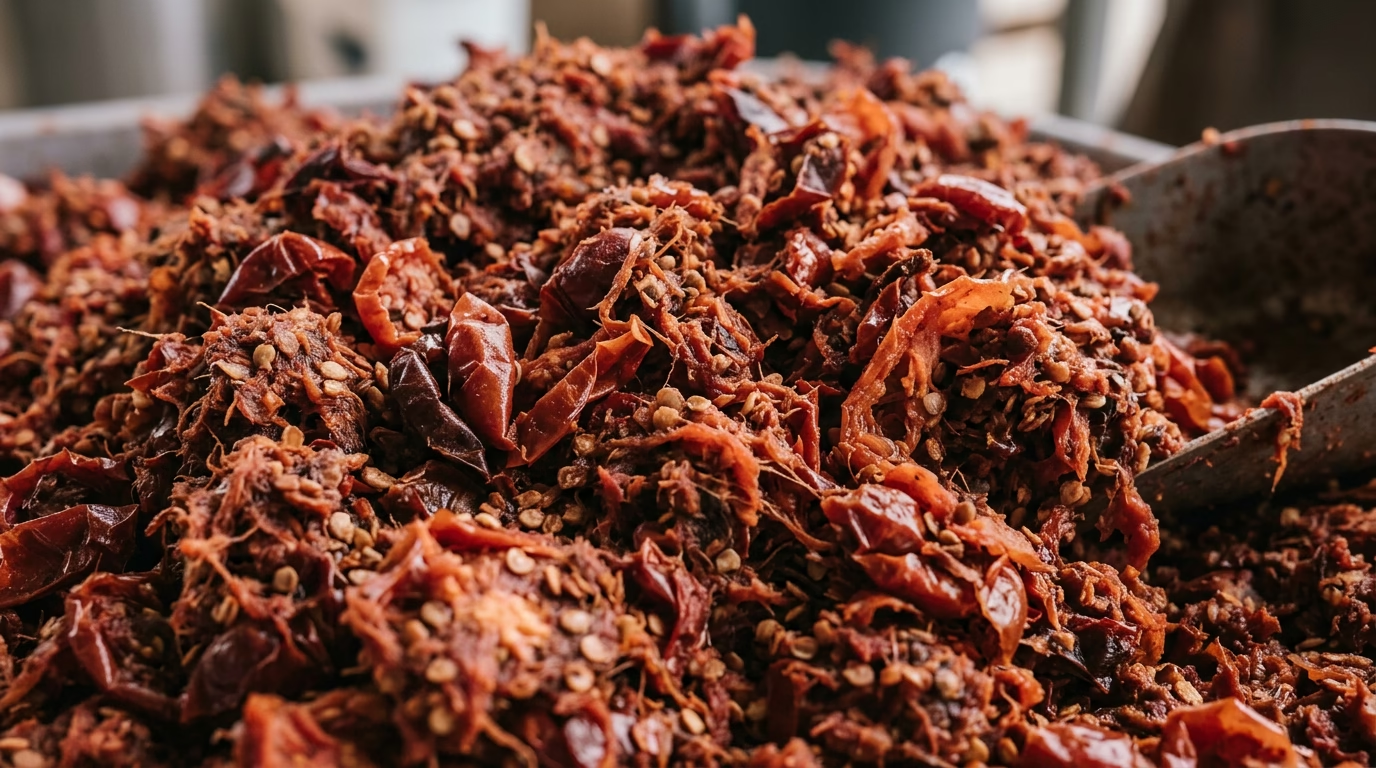
The tomato pomace evaluated in the study was enzymatically pre-treated and vacuum paddle-dehydrated by Simplyeast, resulting in ETP — a fiber-rich tomato co-product containing approximately 20% crude protein and 11% crude fat on a dry matter basis.
This processing approach enables the valorization of a locally available food industry co-product into an ingredient suitable for further evaluation in pet food applications.
Evaluating ETP in Adult Dog Diets
To assess its potential application in pet food, ETP was evaluated in a feeding study involving 12 adult Beagle dogs. Three extruded diets were tested, containing 0% (control), 2% and 4% ETP, across three experimental periods of 28 days.
The diets were formulated to be iso-energetic, iso-lipidic and iso-nitrogenous. The study evaluated key parameters including palatability, food and nutrient intake, body weight and body condition score, fecal characteristics and metabolites, apparent total tract digestibility (ATTD), and metabolizable energy.
What Did the Study Find?
The results showed that ETP could be incorporated at the inclusion levels evaluated without compromising key diet performance parameters in adult dogs.
Palatability was maintained across the three diets, with no significant differences in first approach, first taste or intake ratio. Food, nutrient and energy intake also remained unaffected, while all dogs remained healthy throughout the study and maintained stable body weight.
Fecal consistency remained within the normal range across all diets. Importantly, no significant differences were observed among diets in apparent total tract digestibility of dry matter, crude protein, crude fat or gross energy, nor in metabolizable energy.
At the inclusion levels tested, ETP was successfully incorporated into extruded dog food without compromising key diet performance parameters.
Creating Higher Value from Local Co-Products
The results of this study highlight the potential of tomato pomace as a locally sourced ingredient for pet food applications, while also demonstrating how food industry co-products can be explored for higher-value uses.
For Simplyeast, this approach reflects a broader commitment to circular valorization: identifying underutilized co-products, developing suitable processing solutions and exploring new applications supported by scientific evaluation.
By connecting local food industry resources with new applications in sectors such as animal nutrition, co-product valorization can contribute to more circular value chains while reducing dependence on conventional raw material streams.
Local resources. Scientifically evaluated applications. Higher-value circular solutions.